
Introduction: Why Sport Exists
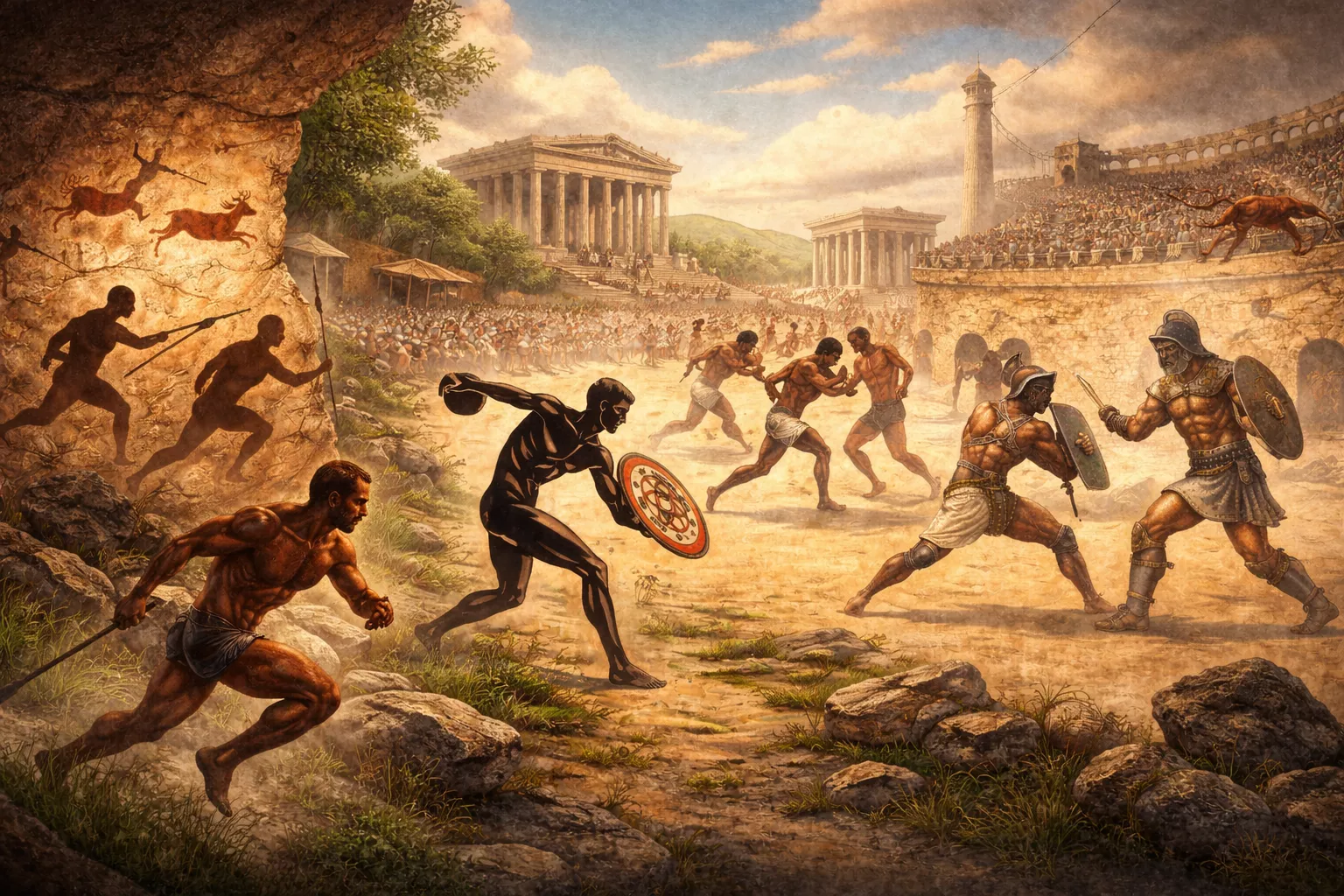
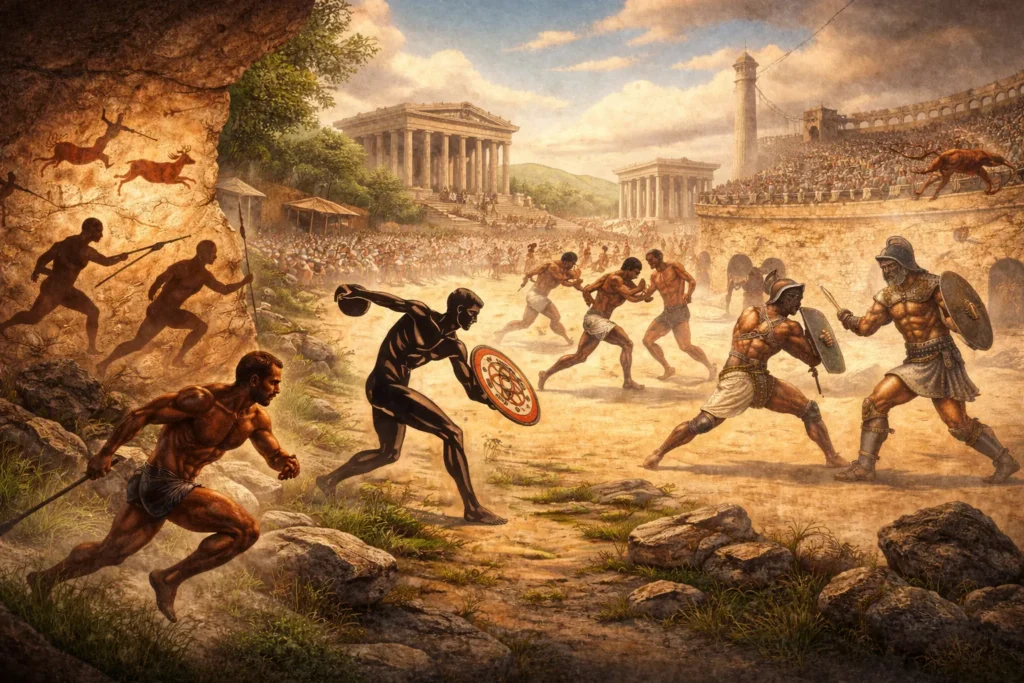
Sport did not begin as entertainment. Long before stadiums and professional athletes, physical competition was essential for survival, strength, and social order. The history of sport is deeply connected to human evolution, warfare, culture, and identity.
The Earliest Origins of Sport
Sport in Prehistoric Times
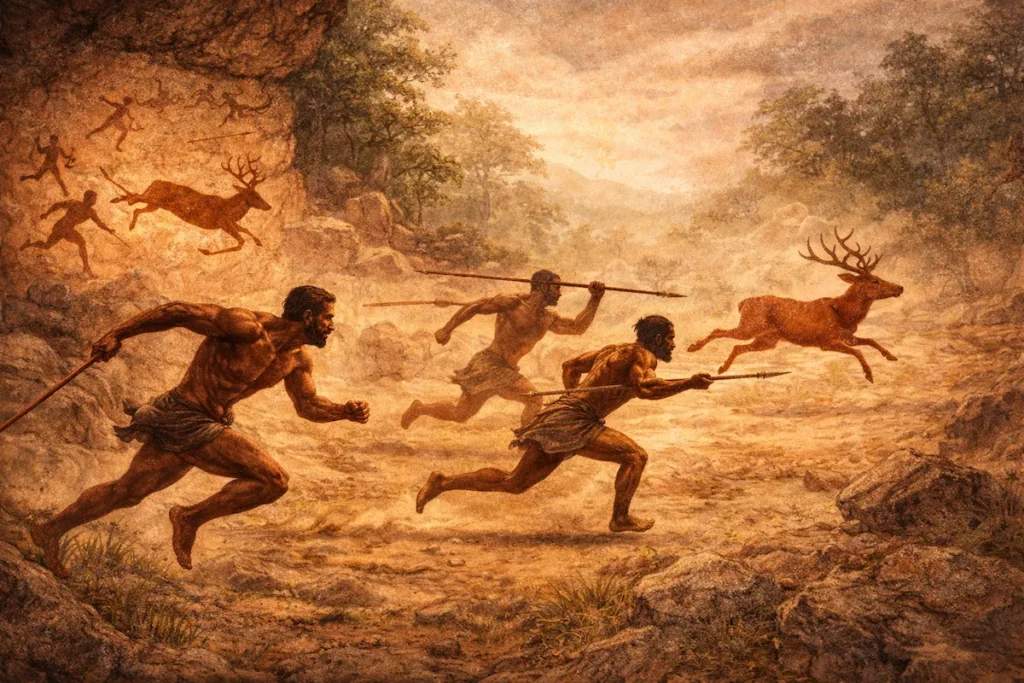
The first forms of sport appeared tens of thousands of years ago. Early humans practiced running, throwing, wrestling, and climbing not for fun, but for survival. These activities prepared them for hunting, combat, and leadership within tribes.
The First Organized Sports in Ancient Civilizations
Ancient Egypt
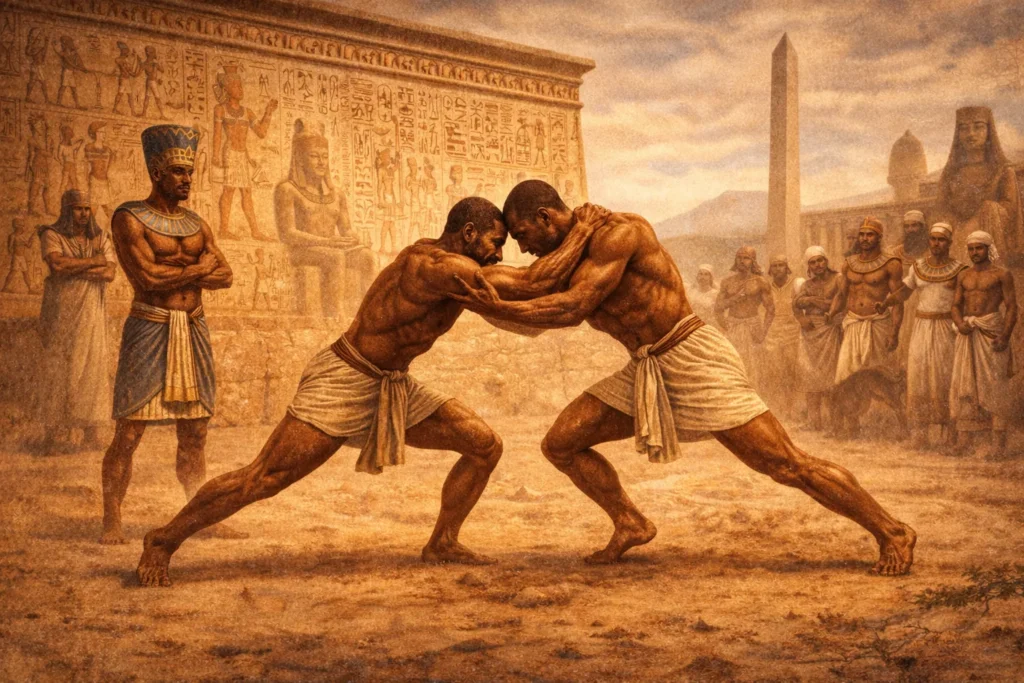
Ancient Egypt is one of the first civilizations to record organized sports. Wrestling, archery, rowing, swimming, and gymnastics were practiced to train soldiers and honor the gods.
Ancient China
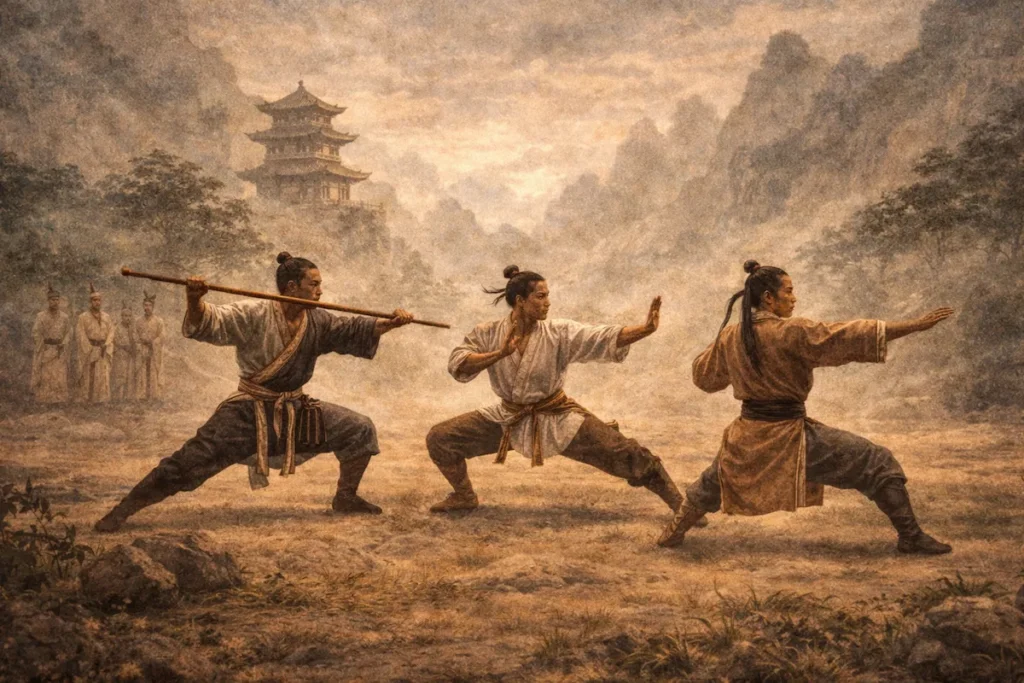
In ancient China, physical activity focused on discipline and health. Early martial arts, military drills, and games like Cuju laid the foundation for modern sport systems.
Ancient Persia and the Role of Sport in Iranian Civilization
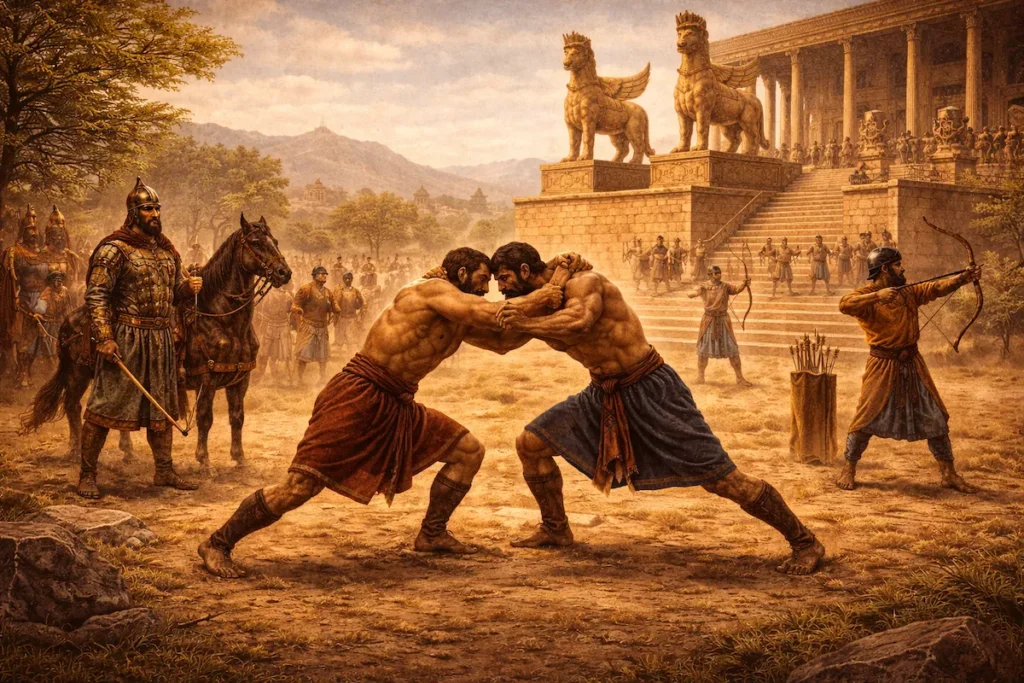
Physical Training, Wrestling, and Military Preparation
Long before the rise of modern sport, Ancient Persia placed great importance on physical strength, discipline, and combat readiness. In the Iranian plateau, physical training was deeply connected to military preparation, moral education, and social identity.
One of the most important physical practices in ancient Persia was wrestling, which played both a cultural and military role. Wrestling traditions in the region emphasized strength, balance, endurance, and respect values that later became central to Iranian athletic culture.
Persian soldiers were trained from a young age in running, archery, horseback riding, and hand-to-hand combat, making physical fitness a core element of imperial power. Greek historians, including Herodotus, noted that Persian education focused on truthfulness, discipline, and physical capability.
These traditions laid the foundation for later Iranian sports culture, including Zurkhaneh rituals, which combined strength training with ethics, spirituality, and community elements that distinguished Persian athletic practices from purely competitive sport.
Ancient Greece and the Birth of Competitive Sport
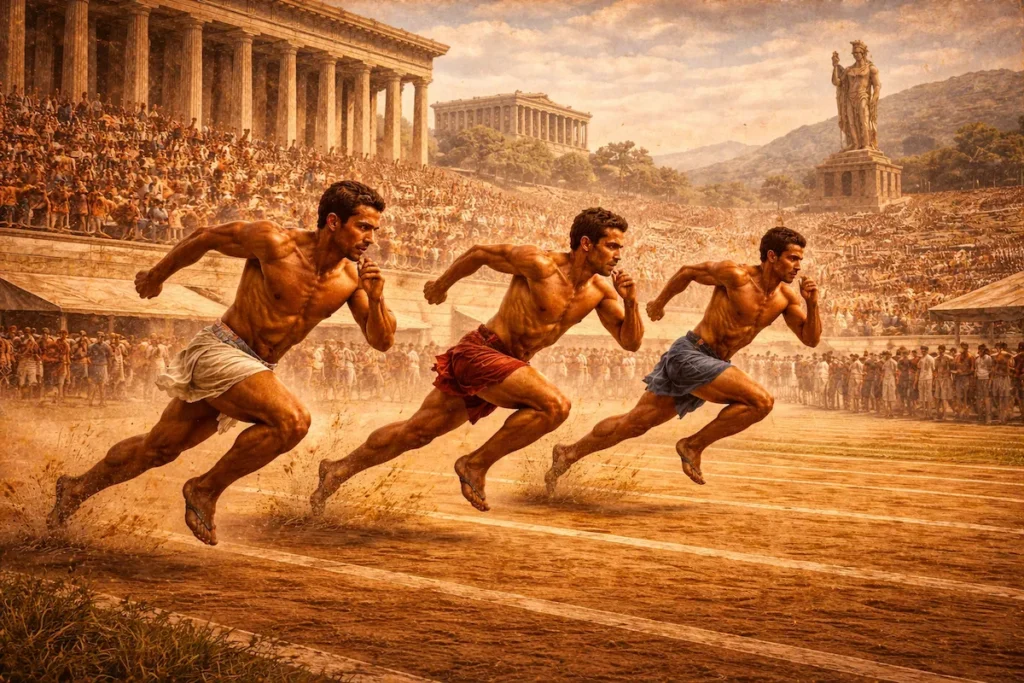
In ancient Greece, sport was not only physical activity but a reflection of philosophy, education, and civic identity. Athletic excellence was linked to concepts such as balance, harmony, and self-discipline, shaping the ideal of a strong mind in a strong body. Competition became structured, rule-based, and publicly celebrated, laying the intellectual and organizational foundation of modern sport.
The Olympic Games
In Ancient Greece, sport became a moral duty. The first Olympic Games were held in Olympia in 776 BCE to honor Zeus. These games established competition, rules, and athletic excellence.
Sport in the Roman Empire
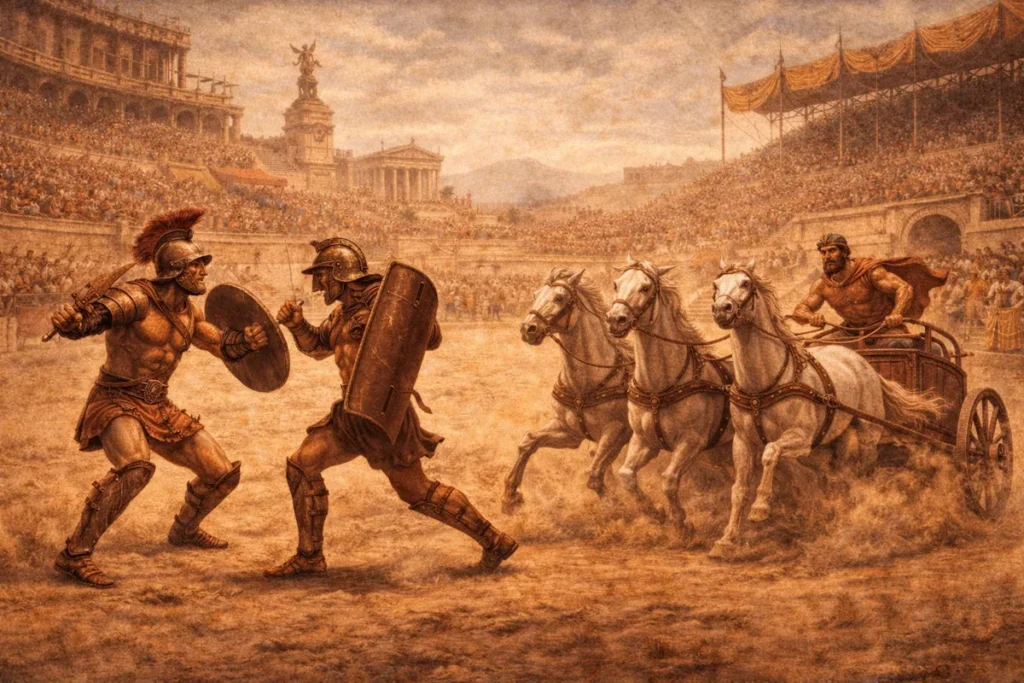
The Roman Empire transformed sport into mass entertainment. Gladiator fights and chariot racing turned physical competition into political and social spectacle.
Sport in Rome shifted from personal excellence to spectacle, power, and mass control.
The Birth of Modern Sport
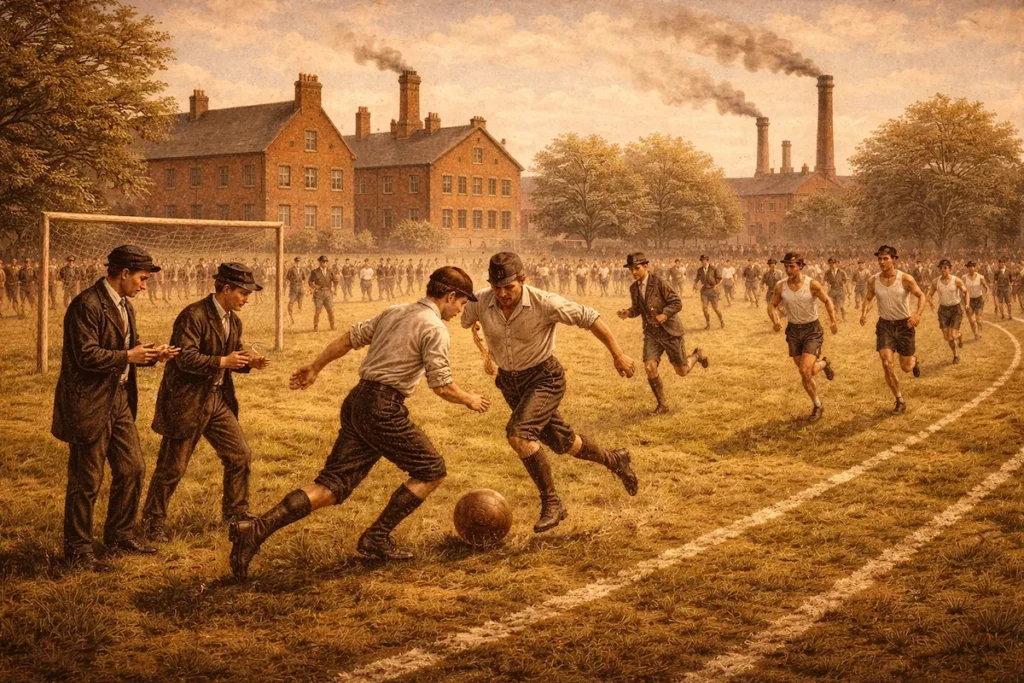
England and Modern Rules
Modern sport emerged in England during the 18th and 19th centuries. Football, boxing, athletics, and organized competitions were standardized with clear rules and federations.
Why Sport Was Created
- Survival and physical preparation
- Military training
- Health and discipline
- Social unity
- Cultural identity
- Entertainment and inspiration
Frequently Asked Questions About the History of Sport
When did sport first begin?
Sport began in prehistoric times as part of survival, hunting, and combat preparation.
Which civilization created the first organized sports?
Ancient Egypt and Ancient Greece were among the first to organize sports systematically.
Frequently Asked Questions About the History of Sport
Conclusion: Sport as a Mirror of Humanity
Sport reflects human history. From survival instincts to global competitions, it shows how societies evolve, compete, and connect. Understanding the origins of sport helps us understand ourselves.